

Roofing systems in Alden, NY face repeated cycles of snow, ice, wind, rain, humidity, and temperature changes. The most damaging effects often come not from one dramatic storm, but from small stresses that repeat across many seasons.
Understanding how weather affects roofing materials helps residents notice problems earlier, interpret warning signs correctly, and reduce the chance that a minor defect becomes interior water damage.
How does winter weather affect a roof?
Winter weather can damage a roof through snow weight, ice formation, wind exposure, and repeated freezing and thawing. The roof surface, flashing, gutters, and attic are all involved in how well a home handles winter conditions.
Snow itself is not automatically dangerous. Roofs are designed to support expected seasonal loads, but unusually deep, wet snow places more weight on the structure than light, powdery snow. The risk may increase when several snowfalls accumulate without fully melting.
Potential warning signs include:
- Sagging roof lines
- Doors that suddenly stick or fail to close normally
- Cracks or movement in ceilings and interior walls
- Water stains appearing after a snowfall
- Gutters pulling away from the roof edge
Ice can also create problems at the eaves. When heat escapes through the upper part of a house, it may warm the underside of the roof and melt snow above. Water can then refreeze near colder roof edges, forming an ice dam. The dam can hold water against roofing materials, allowing moisture to move beneath shingles or into areas around flashing.
Ice dams are often linked to attic insulation and ventilation problems rather than outdoor temperature alone. Removing snow from the roof may provide temporary relief, but it does not correct the heat pattern that caused the melting and refreezing.
Why are freeze-thaw cycles hard on roofing materials?
Freeze-thaw cycles cause water to expand and contract repeatedly. That movement can widen small cracks in masonry, flashing sealants, pipe boots, and other roof components.
A tiny opening may not cause noticeable leakage during one rainstorm. After repeated freezing, however, the opening can become large enough for water to enter. Porous materials can also absorb moisture, which expands when it freezes and gradually weakens the material.
These cycles affect more than shingles. Common vulnerable areas include:
- Chimney edges and masonry joints
- Roof valleys where water concentrates
- Metal flashing around walls and penetrations
- Exposed fasteners
- Older sealants and roofing cement
- Gutter seams and downspout connections
A roof may appear intact from the ground while these hidden areas deteriorate. Water entering through a small defect can travel along rafters or roof decking before appearing as a ceiling stain, making the visible damage seem far from the original entry point.
What does summer heat do to a roof?
Summer heat can accelerate aging, especially when roofing materials are exposed to prolonged sunlight and high surface temperatures. Shingles may become brittle, lose protective granules, or curl at the edges as the material expands and contracts.
Dark roof surfaces can become much hotter than the surrounding air. That heat is transferred into the roof assembly and attic. If the attic lacks balanced intake and exhaust ventilation, heat and moisture may remain trapped beneath the roof.
Excessive attic heat can contribute to:
- Premature aging of shingles
- Warped or weakened roof decking
- Higher indoor temperatures
- Increased strain on cooling equipment
- Condensation during cooler nights
- Deterioration of insulation
Heat damage is not always easy to identify. Granules in gutters, brittle shingles, exposed fiberglass mat, and curled edges may indicate surface aging. However, granule loss can also result from hail, foot traffic, poor installation, or ordinary wear, so the surrounding conditions matter.
How do rain and humidity affect a roof?
Rain exposes weak points that may remain unnoticed during dry weather. Water usually enters through failed flashing, damaged shingles, open seams, blocked drainage paths, or deteriorated penetrations for vents and utilities.
Humidity creates a separate risk inside the roof system. Warm indoor air can move into a cold attic through gaps around light fixtures, plumbing, chimneys, attic hatches, and electrical wiring. If that air reaches cold surfaces, condensation can form. Over time, moisture may contribute to mold growth, wood deterioration, rusty fasteners, and damp insulation.
Roof ventilation is meant to support airflow, not to replace air sealing. A well-ventilated attic can still develop moisture problems if warm household air is escaping into it. Likewise, adding vents without providing a balanced airflow path may not solve the issue.
After heavy rain, residents may notice:
- Fresh ceiling or wall stains
- Damp insulation
- Musty attic odors
- Peeling paint near upper walls
- Darkened roof decking
- Water in areas near chimneys or skylights
A stain that dries between storms does not necessarily mean the problem is gone. Intermittent leaks may only appear when wind pushes rain in a particular direction.
Can wind damage a roof even without missing shingles?
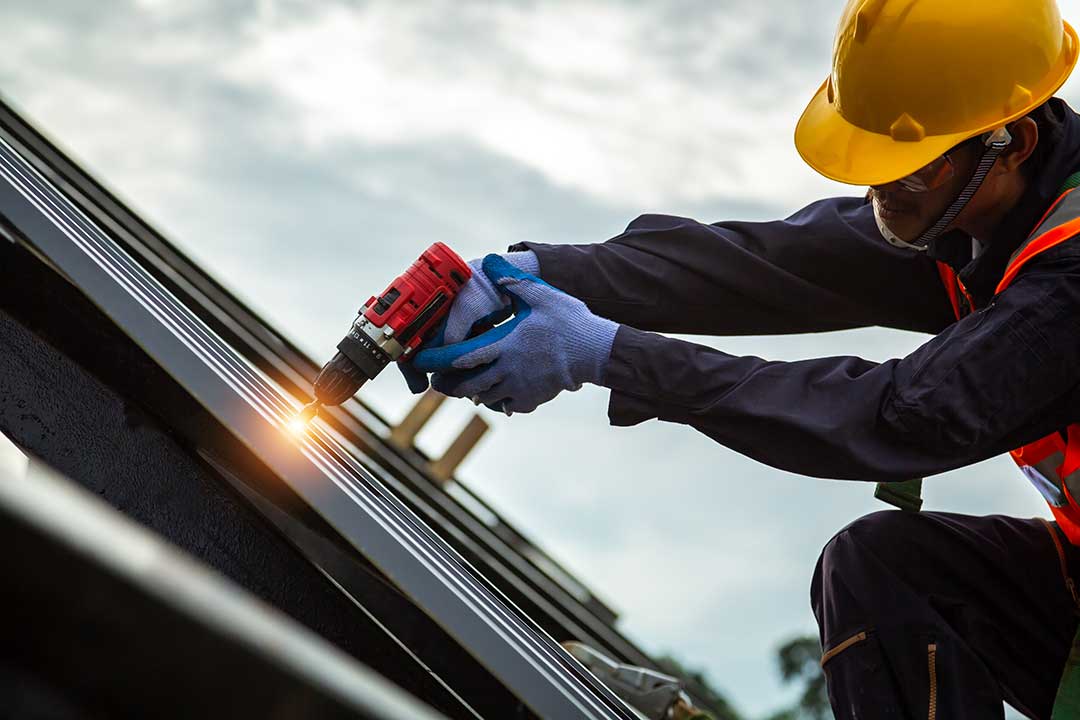
Yes. Wind can lift, loosen, or bend roofing components without removing them completely. Shingles may develop lifted edges or weakened adhesive bonds, leaving openings that are difficult to see from the ground.
Wind can also damage:
- Ridge caps
- Drip edges
- Flashing
- Gutter sections
- Soffits and fascia
- Vent covers
- Tree limbs overhanging the roof
Wind-driven rain is especially concerning because it can move upward or sideways beneath laps and flashing. A roof that does not leak during ordinary rainfall may leak during a storm with strong gusts.
After a windy event, look for loose debris, exposed underlayment, displaced flashing, and shingle pieces in the yard. Do not climb onto the roof to investigate. Wet surfaces, steep slopes, and hidden structural damage create fall hazards.
How does hail affect roofing?
Hail can bruise or fracture shingles, damage metal flashing, crack skylights, and mark gutters or downspouts. The effects depend on hail size, wind speed, roof age, material condition, and the angle of impact.
Hail damage is sometimes visible as dark circular marks or areas where granules have been knocked away. Some impacts are subtler and may only become leak points later. Hail can also damage siding, window trim, and outdoor equipment, so the entire exterior may provide clues about storm intensity.
Not every dark spot is hail damage, and not every hail strike causes an immediate leak. Careful observation is more useful than assuming that all surface marks have the same cause.
Which roof areas deserve the closest attention?
Certain locations experience more water movement, movement between materials, or exposure than the main field of the roof. These areas often deserve closer observation after severe weather:
- Valleys
- Eaves and roof edges
- Chimney and wall intersections
- Plumbing and ventilation penetrations
- Skylight borders
- Areas beneath overhanging trees
- Low-slope sections
- Gutters and downspouts
Keeping gutters and downspouts clear helps water leave the roof efficiently, but clean gutters cannot correct damaged flashing or a roof slope that drains poorly. Water should move away from the foundation rather than collect beside the house.
What roof checks are reasonable for homeowners?
A ground-level inspection after major weather is useful and safer than climbing onto the roof. Binoculars can help identify missing shingles, lifted edges, sagging lines, damaged vents, or heavy debris.
Inside the home, check the attic and upper ceilings for damp insulation, water marks, daylight through the roof deck, or musty odors. These checks are especially useful after periods of snow, wind-driven rain, or rapid temperature changes.
Professional evaluation becomes appropriate when there is active leaking, structural sagging, suspected storm damage, electrical involvement, or a need to walk on a steep or slippery roof. Safety concerns should take priority over trying to confirm every defect personally.
Weather does not affect every roof in the same way. Age, installation quality, ventilation, insulation, roof slope, surrounding trees, and maintenance history all influence how a home responds. In this climate, paying attention after major storms and during seasonal transitions can reveal small problems before they become larger repairs.
