
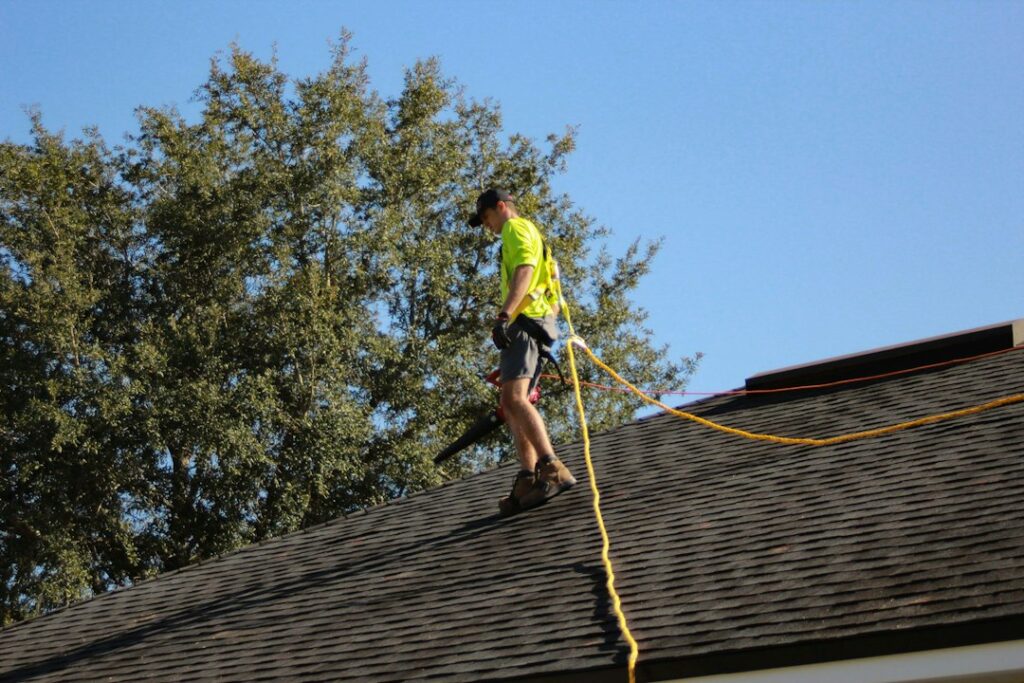
Cleaning a roof can remove leaves, moss, algae, and other debris, but the work becomes dangerous quickly. Roof surfaces may be steep, wet, brittle, or weakened by hidden damage. In Alden, NY, seasonal rain, snow, ice, freeze-thaw cycles, and falling leaves can all affect roof conditions, so safe cleaning starts with knowing when the work should not be done from the roof at all.
Is it safe to clean a roof yourself?
Roof cleaning is safest when performed from the ground or from a stable ladder for low-risk, reachable areas. Walking on the roof is not appropriate for every homeowner, especially when the surface is steep, damp, moss-covered, icy, fragile, or more than one story above ground.
Before beginning, inspect the roof from the ground. Look for:
- Missing, lifted, or cracked shingles
- Sagging areas
- Loose flashing around chimneys, vents, or roof edges
- Moss or algae covering large sections
- Power lines near the work area
- Wet leaves, frost, ice, or snow
- Gutters that appear detached or unstable
If any of these conditions are present, cleaning may cause more damage or create a serious fall hazard. A roof that feels soft underfoot may have moisture damage beneath the shingles and should not be walked on.
What roof debris can be removed safely from the ground?
Light debris can often be removed without climbing onto the roof. A roof rake designed for the specific task may help with loose leaves and small amounts of snow, but it should be used gently and from a position where falling material will not strike the operator.
A long-handled, soft-bristle brush may be useful for reachable roof edges, porch roofs, or low-slope sections. Avoid using force to scrape off material that is stuck to shingles. Aggressive scraping can remove the protective surface from asphalt shingles, loosen granules, and shorten roof life.
Keep people, pets, vehicles, and outdoor furniture away from the area below. Debris can slide or fall unexpectedly, particularly when leaves are wet or frozen together.
How should a ladder be used during roof cleaning?
A ladder should be used only on firm, level ground and should be inspected before setup. Place it away from slippery surfaces, unstable soil, downspouts, and areas where falling debris may land.
Good ladder practices include:
- Keep both feet and at least one hand in contact with the ladder whenever possible.
- Do not stand on the top step or the highest step marked as unsafe.
- Keep your belt buckle between the ladder rails instead of leaning far to either side.
- Have another adult secure the ladder when conditions are less than ideal.
- Do not carry heavy buckets, pressure washers, or bulky tools while climbing.
- Never place a ladder on ice, snow, stacked boards, or other makeshift supports.
If access requires stepping from a ladder onto the roof, the risk increases substantially. Roof edges, eaves, and the area around gutters are common locations for slips and missteps.
What cleaning solution is safe for roof shingles?
For asphalt shingles, a mild cleaning solution is generally less damaging than bleach-heavy mixtures, strong solvents, abrasive powders, or pressure washing. Any product should be used according to its label and tested on a small, inconspicuous area first.
Avoid mixing cleaning chemicals. In particular, combining chlorine-based products with acids, ammonia, or other cleaners can create dangerous fumes. Wear chemical-resistant gloves and eye protection, and keep the solution away from skin, pets, plants, ponds, and storm drains.
A low-pressure application is preferable to a forceful spray. Rinsing should be gentle and directed downward so water does not get pushed beneath shingles, flashing, siding, or vent openings.

Can a pressure washer be used on a roof?
Pressure washing is usually a poor choice for asphalt shingles and many other roofing materials. High-pressure water can remove protective granules, break brittle shingles, force water underneath the roofing, and damage flashing or sealants.
The same concern applies to concentrated spray from a garden hose. A light rinse may be appropriate for a compatible surface, but water should never be directed upward beneath shingle edges or into roof vents.
Some roofing materials, such as metal, tile, slate, or wood, have different cleaning requirements. A method that is acceptable for one material may damage another. If the roof type is unfamiliar, avoid experimenting with chemicals or equipment.
How can moss and algae be removed without damaging shingles?
Moss should not be pulled, scraped, or brushed aggressively from shingles. Its roots or growth structures may be attached to the roofing surface, and removing it forcefully can lift shingle edges.
A cleaner intended for the specific roofing material can be applied gently and allowed to work over time. Dead moss may loosen gradually, but it should not be torn away if doing so removes shingle granules.
Algae often appears as dark streaks and is more common on roof sections that stay damp or receive less direct sunlight. These streaks may be unattractive without indicating immediate structural failure. Cleaning can improve appearance, but it will not correct poor drainage, blocked gutters, inadequate ventilation, or persistent shade.
Do not install or nail metal strips into shingles unless the roofing manufacturer specifically permits that method. Fasteners can create leaks, and improvised treatments may void material warranties.
What should be done with gutters during roof cleaning?
Gutters should be cleared carefully from a stable ladder, not by leaning over a roof edge. Wear gloves because gutters may contain sharp metal edges, decomposing leaves, insects, and animal waste.
After removing debris, check that water flows through the downspout and away from the foundation. In the local freeze-thaw climate, blocked gutters can contribute to ice buildup, overflow, and water entering around roof edges.
Do not depend on gutters to catch large amounts of roof-cleaning runoff. Chemical residue and loosened debris can wash into soil, gardens, drainage paths, or surface water. Use reasonable containment where practical and follow the product label for disposal and rinsing.
When should roof cleaning be postponed?
Postpone the work during rain, wind, frost, snow, or freezing temperatures. A roof that appears dry may still have a slippery film from overnight condensation or melting snow.
Spring and fall can be particularly challenging because of wet leaves, changing temperatures, and unstable footing. Summer heat can also make shingles soft and uncomfortable to walk on, while strong sunlight may increase exposure to cleaning chemicals.
Cleaning should also be postponed if the roof has visible damage, if tools cannot be kept secure, or if the work requires walking near an unprotected edge.
When is professional help genuinely necessary?
Some roof-cleaning situations require specialized fall protection, equipment, or material knowledge. This includes steep roofs, high rooflines, slate or tile roofing, widespread moss, suspected structural damage, nearby power lines, and any surface that cannot be reached safely from the ground or a properly positioned ladder.
The safest approach is to treat roof cleaning as both a maintenance task and a fall-prevention task. Removing a few leaves is not worth risking a serious injury or damaging shingles that may otherwise have lasted for years.
